

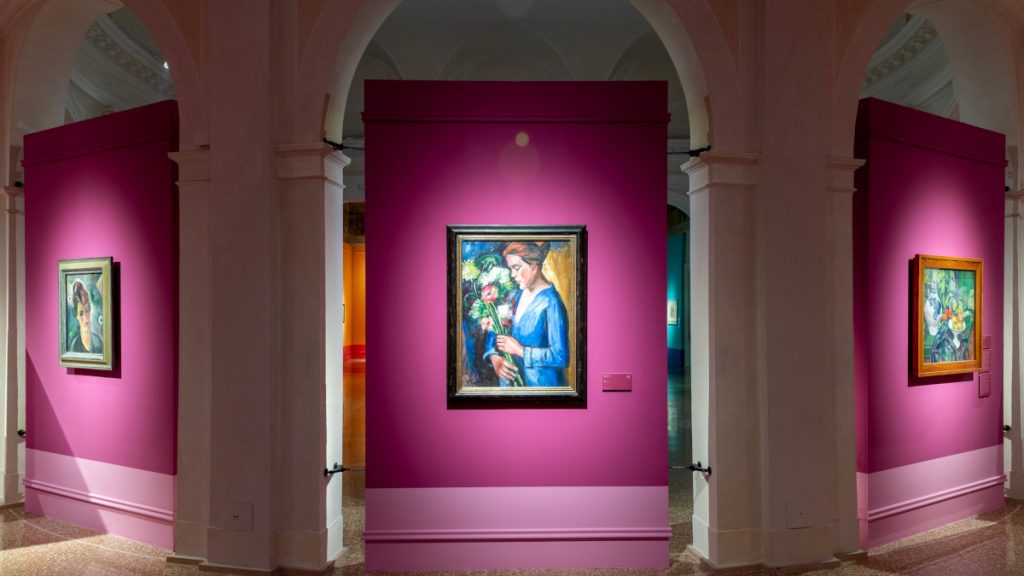
Max Pechstein is the celebrated artist at the center of the highly anticipated new exhibition at Palazzo Zabarella in Padua. The exhibition will run from October 24, 2026, to March 14, 2027, showcasing over 120 selected masterpieces. The exhibition includes paintings, graphics, photographs, and drawings created over fifty years of intense and passionate activity. The event is the result of a close collaboration between the Bano Foundation, the Municipality of Padua, and leading German cultural institutions.

Who was Max Pechstein: the artist's life and career
Max Pechstein was born in Zwickau in 1881 and completed his art studies at the Dresden Academy. In 1906, he joined the expressionist group Die Brücke, immediately distinguishing himself for his solid education. He later moved to Berlin, where he helped found the Neue Secession in 1910 and the November Group. In 1923, he obtained the prestigious chair of painting at the Berlin Academy of Arts, consolidating his fame. His career, however, was disrupted by service at the front during the First World War and the subsequent Nazi persecution. In 1937, the regime defined his works as "degenerate art," confiscating over three hundred of them and depriving him of his teaching position. Reinstated after the Second World War, the artist continued to paint and teach until his death in 1955.

Travels and the search for “uncontaminated places”
Throughout his life, the artist felt a deep need to escape the metropolis and seek authentic contact with nature. His travels took him to the Baltic Sea, Italy. in Monterosso al Mare and in the distant Palau Islands in the Pacific. His granddaughter Julia Pechstein revealed this fundamental aspect of his personality in a valuable interview. Julia explains that in his solitary sojourns, the painter sought "the pristine unity between nature and humanity." Originally from an industrial city and living in Berlin, Pechstein suffered from the oppressive conformity of Western society. During his first stay in Nidden, the artist thus experienced for the first time "the intoxicating and eternal rhythm of the sea." The impact of wild and uncontaminated nature offered the painter an ideal refuge from the anxieties and conflicts of the time.

The exhibition sections of the itinerary at Palazzo Zabarella
The exhibition opens with a selection of photographs taken by Pechstein in 1927 along the coast of Pomerania. The first section explores his early works, his early work with the Brücke, and his fruitful dialogue with the European avant-garde. The second section brings together the celebrated canvases resulting from his travels in Italy and the pristine Palau Islands. The exhibition concludes with his late work, where light and color transform memories into poetry.


